
Album Review
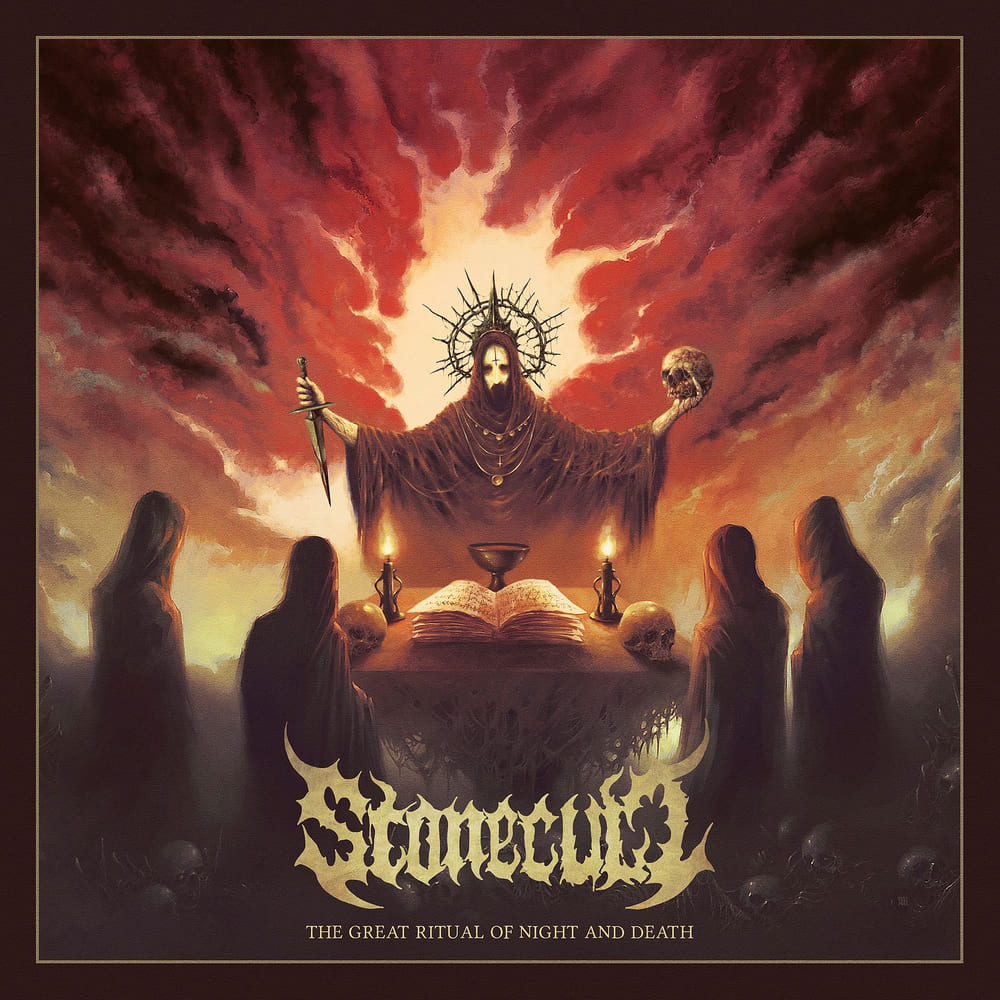
Stonecult - The Great Ritual of Night and Death
Independent
Black Metal
08/10
Another album has entered our archives from the underground darkness of the Turkish black metal scene. After raising expectations with Extinction VI, Stonecult released their debut full-length album, The Great Ritual of Night and Death, on February 20.
Shaped around misanthropy, the extinction of mankind, rebirth through chaos, and ancient occult beliefs, the album turns the collapse of humanity itself into a slogan through these very foundations. Spanning over 35 minutes across eight tracks, the record confronts the listener with the immense void within, like a cold reality, without ever romanticizing nihilism.
Stone Cult’s method of crafting black metal steps outside the safe zone that glorifies second-wave Nordic black metal nostalgia, constructing instead an apocalyptic reality of its own. Rejecting the false enlightenment of modernity, this approach reaches our ears like a ritual rising from the dark corners of the Pre-Pottery Neolithic age.
The first element that stands out upon listening to the album is the backbone formed by razor-sharp tremolo riffs and the dense, organic drum work supporting them. The band consciously distances itself from a one-dimensional obsession with speed. Reverb-soaked transitions that enhance the dynamism between songs and keep the album flowing, crushing mid-tempo passages, and choir-like background textures that evoke an almost ceremonial feeling elevate the record beyond mere “raw assault” into a realm of ritualistic darkness.
“Apocalypse” in particular manages to become one of the album’s high points through both its lyrics and the overwhelming density of its sound. The melodic lines drifting above the blast beats transform the chaos coursing through the album’s veins into an aesthetic of controlled destruction.
When it comes to the album’s sound design, the production has clearly been left intentionally unpolished. The guitar tones are icy and razor-edged; the drums are balanced well within the mix, and the overall clarity remains intact.
On vocals, Helverg may appear younger in experience compared to his bandmates, yet he handles the role masterfully in terms of performance. His tone is powerful and aggressive. The measured and varied use of both scream and brutal techniques, along with the smart choices he makes in positioning the lyrics between the riffs, prevents the vocal performance from slipping into monotony.
This raw and organic production choice, which defines the album’s identity, grants the work an authentic texture rooted in the past; though it can occasionally limit the dynamic range and atmospheric impact. Still, this never causes the album to stumble — on the contrary, it creates a valuable field of experience in the band’s process of solidifying its character. The short instrumental transitions offer the listener moments to breathe while at times evoking the fairy-tale-like and atmospheric transitions familiar from the Swedish melodic black metal scene of the ’90s.
The language used throughout the album’s lyrics functions as a deliberate continuation of classic black metal rhetoric: direct, slogan-like, and driven through imagery. Its metaphorical world revolves around fire, ash, blood, night, darkness, decay, and apocalypse, while natural imagery (“crimson moon,” “rivers of blood,” “barren lands”) transforms into allegories reflecting humanity’s moral and ontological collapse.
The repeated use of phrases (“Magnus ritus noctis et mortis,” “All man must die,” “I am fire”) establishes an almost liturgical structure, bringing the lyrics closer to a ritual text than a conventional song narrative. Latin titles and expressions such as “Ordo Ab Chao” and “Ante Purgatorio” add an occult gravitas to the text, while the short and cutting sentence structures create a manifesto-like effect, particularly within the choruses. This element especially suggests that the songs possess the potential for even greater participation and fervor in a live setting.
The Great Ritual of Night and Death offers not so much a flawless technical showcase as it does a powerful underground atmospheric stance. Stonecult are not yet operating in the same league as the heavyweight names of the international scene; however, the vision and conceptual integrity displayed throughout this album make it abundantly clear that the band is far from being an ordinary black metal project.
OZY