Review
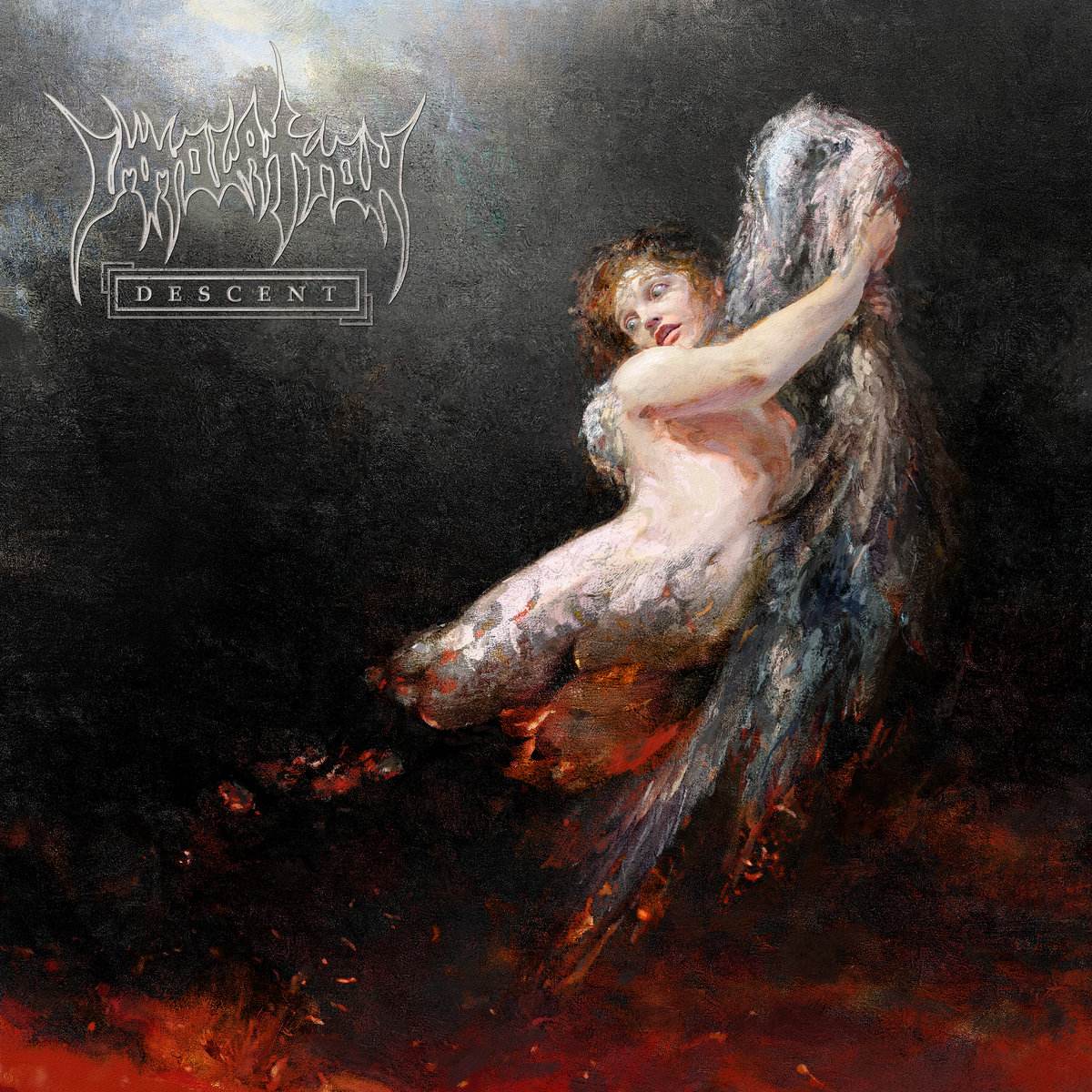
Immolation - Descent
Nuclear Blast Records
Death Metal
8.5/10
Some bands do not age as the years pass; they simply start speaking less and hitting harder. Immolation now stands exactly in that kind of place. The most striking aspect of “Descent” is neither its technical capability nor the consistency approaching four decades. Those are already expected qualities. The real issue is that the band no longer seems to be making an extra effort to create chaos. Through the reflex of the experience it has accumulated over the years, Immolation carries its grim reaper-like sound — one that loads the breath of death onto the back of chaos — across the world.

The album’s overall character is surprisingly direct. That labyrinthine structure felt throughout the band’s later works has receded here; the riffs are still crooked, still restless, but for the first time they march toward their target with this much clarity. Robert Vigna’s guitar writing once again constructs its own geometry: it feels as though the riffs are forming abstract shapes that resist interpretation rather than moving in a straight line. Yet what makes “Descent” different is that this dissonance no longer functions like ostentatious chaos, but instead creates a deliberate sense of compression. The songs do not expand; they contract. The more you listen, the more they lock you inside themselves.
That is why the album’s strongest moments are not its breaking points. On the contrary, the weight that emerges when the tempo drops is far more impressive. Tracks like “False Ascent” and “Bend Towards The Dark” remind you that brutality is not merely about blast beats and rapid tremolo riffing. The sense of groove here operates beyond old-school death metal clumsiness; it becomes a controlled mechanism of pressure. Steve Shalaty’s performance, especially in this regard, turns into the album’s invisible backbone. The blast beats are impressive, yes, but the real mastery lies in the transitions. He maintains a constant sense of attack while preventing the rhythm from becoming entirely mechanical.
The album’s production carries a similar balance. Excessively clean, yet never sterile. There is an almost physical density in the guitar tone — something familiar from the band’s previous works — that is equally present throughout the sound of “Descent”; especially during the mid-tempo passages, the riffs do not hang suspended in the air, they strike directly against the body. The common modern death metal problem of “making everything gigantic through technology while leaving no real weight behind afterward” does not exist here. The sound of “Descent” possesses an enormous mass by its very nature, without needing any extra effort to achieve it.
Still, the album is not flawless. Ross Dolan’s vocals fulfill their function perfectly, but at times they lag behind the movement happening throughout the rest of the music. While the guitars continuously mutate, the vocals often remain locked into the same tonal cadence. Perhaps this does not damage the atmosphere of the album, but it does prevent certain sections from settling more deeply into memory. That sense of uniformity becomes particularly noticeable in the middle portion, where the songs progress at a similarly sustained intensity.
This album is not concerned with creating unforgettable choruses or dramatic peaks. That has never been the instinct carried by the sound we have heard from Immolation throughout the years. The band never left its mark through temporary moments of shock; it did so by applying constant pressure. It follows the same path here. Once the album ends, what remains is not specific melodies but an overwhelming sensation of compression — as though the music slightly reduces the oxygen level of the room you are listening in.
Considering how many old death metal bands today still try to appear “aggressive,” the most valuable aspect of “Descent” is its lack of any need to prove itself. The album does not open a new direction. In fact, at times it consciously moves within its own boundaries. But it does this with such confidence that what emerges feels not nostalgic, but almost threateningly innovative. Immolation is not repeating its past here; it is demonstrating just how effectively and economically it can now wield its own language.
OZY