Album Review
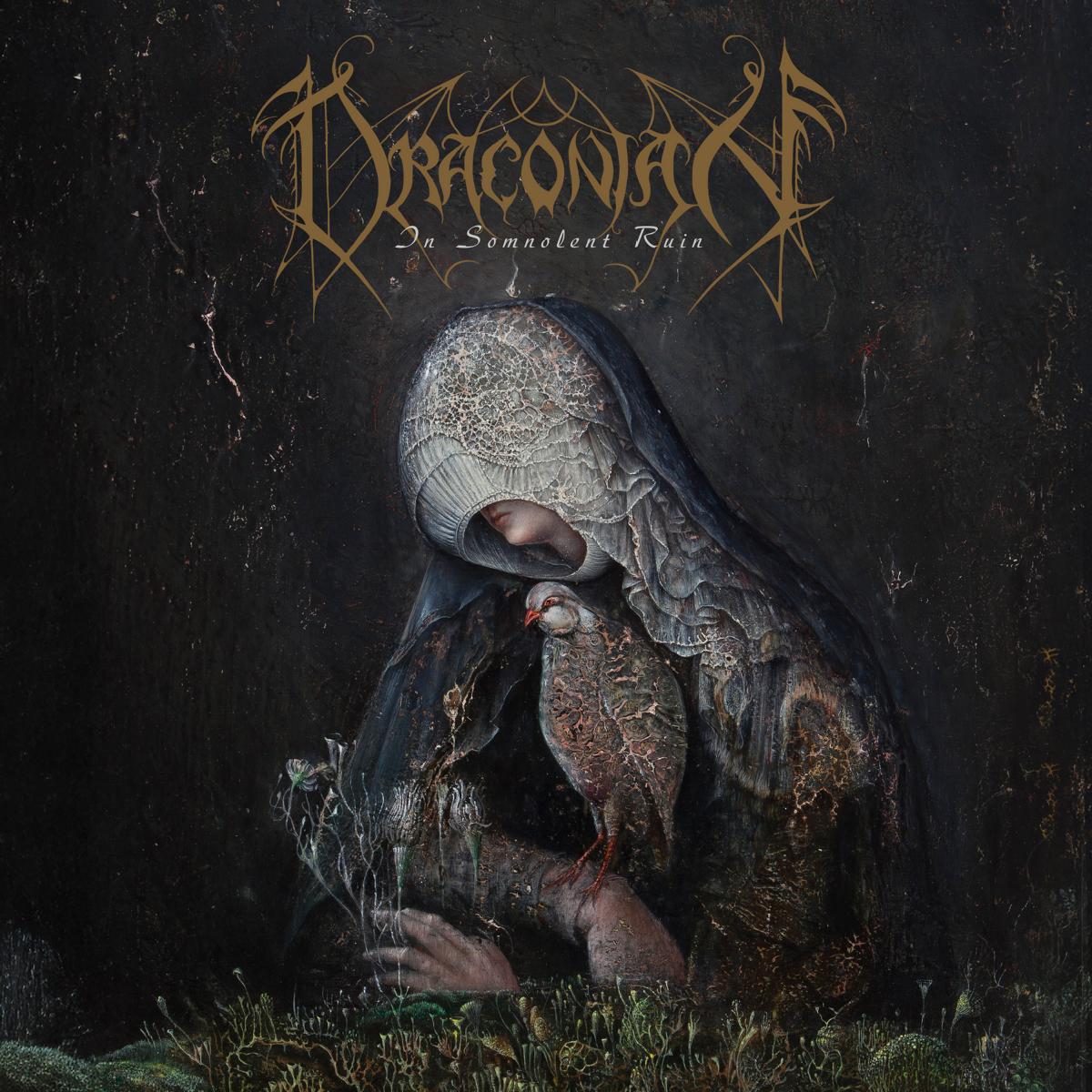
Draconian – In Somnolent Ruin
Napalm Records
Gothic/Doom/Death Metal
09/10
After an album in which some bands reach the absolute peak of their career, the listener is often left with the question or expectation: “what has changed?” or “is this a new masterpiece?” Yet the issue is not change itself, but the trajectory along which change moves through life. The real question is the direction of that change. In genres like death/doom, the reflection of change in the listener solidifies like hard concrete the moment it is first perceived. The perception created by Draconian’s new album is exactly like this.
The intense emotion drawn into the record is no longer a factor that can carry the album on its own. Instead, there is a more directed atmosphere, a structure that constantly whispers where you should be looking. Rather than rapidly increasing emotional intensity, the tracks present it in staged sequences. At times they invite the listener into detail, at others they pull back. And those moments of withdrawal are just as decisive as the explosive passages.
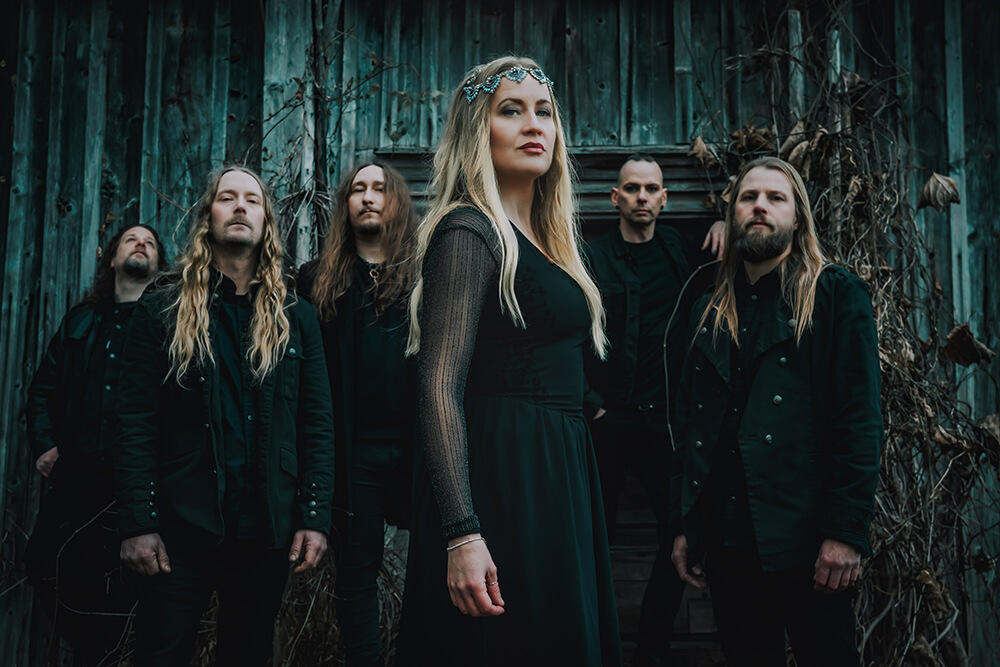
At the center of this structure inevitably lies the vocal balance. Lisa Johansson’s return is not merely a “former vocalist returns” story; it is felt across all lines of the album as the reactivation of a mechanism that directs the music’s emotional trajectory. Her voice is the element that establishes the first contact in most tracks. It conveys the softness of fragile skin before a violent collision. Then, when Anders Jacobsson’s growls enter, that fragility takes on a tangible, almost physically perceptible form within the dimension we inhabit and becomes fixed on solid ground. This contrast may recall the familiar “beauty–beast” dichotomy, yet it never allows the listener to fall into a fairytale-like world, instead steering everything toward the flow of real pain.
The opening track “I Welcome Thy Arrow” is almost a schematic example of this approach. A near-silence introduction, Lisa’s vocals moving with controlled distance, followed by a gradually deepening darkness. What stands out here is not the harsh emptiness of the darkness, but the way its delayed pace effortlessly takes the listener hostage. Everything arrives a little late, and it is precisely this delay that makes the track more tense. It is as if the album is telling the listener from the very beginning where the journey will lead.
“The Monochrome Blade” steers this journey in a sharper direction. The riffs are more threatening, Jacobsson’s vocals more dominant. Yet Lisa’s melodic line in the background prevents the track from surrendering to a one-dimensional heaviness. At this point, the balance Draconian has long been building becomes clear: darkness is not merely intense loneliness, but a tense confrontation.
“Anima” is perhaps the most prominent piece that can be considered the album’s breaking point. Daniel Änghede’s contribution transforms the track from a duet into a three-voiced point of tension. The difference in vocals here is not only about dramatic intensity; it is about voices sharing the same space without suppressing one another. As the track progresses, the emotional weight grows asymmetrically. At one point, it almost feels as if the piece begins to doubt the very emotion it generates. This hesitation makes it as powerful as the shiver a spring morning leaves on the skin.
“Cold Heavens” is one of the most unfiltered moments on the album. Faster, clearer, and more direct. Of course, this directness is not aggressive chaos; it is a breathing space in which the album pours itself out. Especially the rise in the chorus creates not a dramatic explosion, but a sense of lived experience—and this distinction is crucial. It expresses just how expansive the reality Draconian has built with its fans has become.
Compared to the trajectory the album has taken so far, “Misanthrope River” follows a completely different strategy. The track begins almost like a test of patience; slow, understated, even initially somewhat ordinary in texture. This ordinariness leads the listener into a pre-calculated illusion. What comes to the forefront here is not reaching the peak itself, but the internal tension experienced on the way toward it.
Throughout the album, one notable element is that the overall production quality is not as polished as expected. Some details deliberately carry a sense of disarray. Especially in the middle section, a few tracks, while emotionally strong, occasionally drift into areas of compositional repetition. Those who deeply appreciate the band’s sound will find themselves struggling to decide whether this is a weakness or a deliberate form of heaviness. Yet considering DRACONIAN’s history, such “elongation” is not unfamiliar—though it is noticeably more present compared to the previous album.
Still, the atmosphere of the album exerts its effect continuously at every moment. At times it even creates a near-physical sense of density. Short interludes like “Asteria Beneath The Tranquil Sea” or the fading structure of “Lethe” in the closing moments complete the album’s grand dramatic peaks not by shouting, but by stripping them down. This is, admittedly, a relatively risky choice: a closing that fades out rather than resolves a peak.
Looking at the overall picture, comparing this album to its predecessor is inevitable, and it can be safely said that there is no rupture. Draconian neither reinvent themselves nor repeat their past; they appear to be refining their method. This can sometimes create a sense of “too familiar”; for some listeners, it may even be read as stagnation. Yet it is also clear that they are attempting to construct a different emotional architecture from the same material. The key factor here is the lyrics. If you follow them, you will notice that Draconian are more melancholic, darker, and more autumnal than ever.
In the end, what we are left with is perhaps the most valuable piece in a museum of disappointments. Far from dramatic fragility, yet possibly the saddest discovery describing the saddest masterpiece in the world. A fallen autumn leaf that finds its direction together with the listener.
OZY