
Album Review
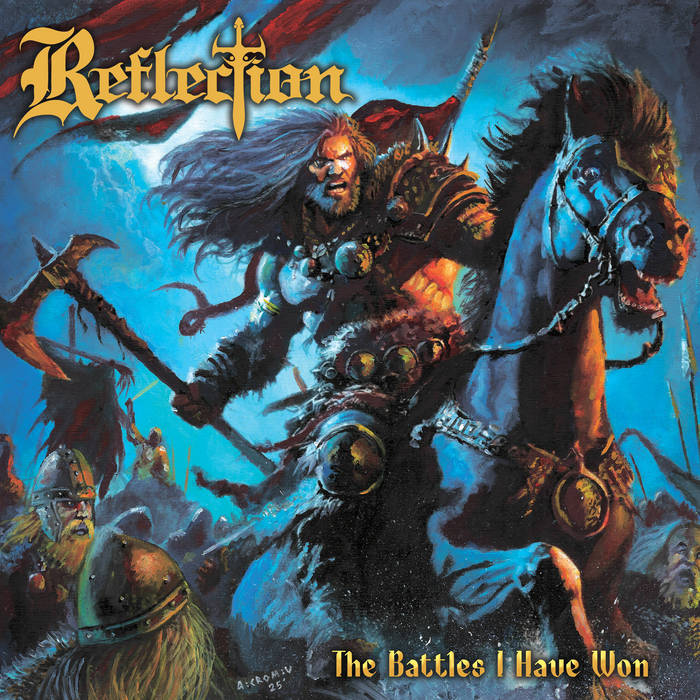
REFLECTION - THE BATTLES I HAVE WON
Pitch Black Records
Epic Heavy Metal
8.5/10
Some sounds fade with time. Others return like ghosts, restless, digging up what was meant to stay buried. After eight years of silence, Reflection come back with "The Battles I Have Won" to remind us of a forgotten truth: epic heavy metal born from these lands is still alive—still standing, still resisting. Written over rhythms that seem to echo through the old streets of Athens, this album rises before us like a monument—carrying the pride of the past while refusing the anxiety of the present.
The album moves like a form of expression that stands against time itself. Opening track "Only the Swords Survive" hits without warning—no intro, no buildup, just a direct blow to the chest. It doesn’t hide behind ambient transitions, nor does it smooth its edges for the sake of modern appeal. Tokas’ vocals—powerful yet worn—begin to tell a deeper story as the album unfolds: these are voices that have lived, these are battles that were truly fought. On the title track, "The Battles I Have Won", that sense of nostalgia transforms into an epic lament. There’s a deeply internalized sense of pride running through every riff—reminiscent of early Manowar, yet never slipping into imitation. The choir-like layers intensify the drama, and while the orchestration in the background occasionally flirts with a sense of artificial grandeur, it undeniably serves the album’s overall emotional weight.
"Sirens’ Song" and "Lady in the Water" bring Reflection’s theatrical side to the forefront. Both tracks are narrative-driven, building stories through their textures. The sorrowful character of the strings in "Lady in the Water" wraps around the listener, creating a distinct emotional language within the album. Here, the guitars feel like ghosts—witnesses to battlefields long gone—carrying echoes of the past into the present.
With tracks like "Celestial War" and "March of the Argonauts", the band stays firmly within the boundaries of classic epic heavy metal, yet enriches that foundation with enough detail to form a genuine connection with the listener. The mid-section of "March of the Argonauts", with its Iron Mask-esque melodic phrasing and songwriting, stands as one of the album’s defining peaks. At times, subtle Eastern touches seep into the melodies, and this fluidity in the guitar work keeps the album from falling into monotony.
Vocalist Kostas Tokas is the heartbeat of the record. His performance unfolds like a narrative—steady, persistent, and grounded. He avoids dramatic excess, instead pushing forward with a restrained, almost stubborn clarity. When he reaches higher notes, it never feels like a struggle to get there—more like he’s always belonged in that space.
From a production standpoint, "The Battles I Have Won" resists the pull of modern sound design, using nostalgia not as a gimmick but as a natural framework. The recordings at Dark Water Audio give the music clarity and depth without stripping away its inherent weight. The crunch of the rhythm guitars, the force of the drums, the warmth of the solos—they’re all placed with careful intention. The closing track, "City Walls of Malta – The Great Siege", is perhaps the clearest expression of this aesthetic. Drifting close to ballad territory, it marks the emotional peak of the album. And yes—ending on a soaring guitar solo feels like the most human, most unmistakably Reflection decision they could have made.
"The Battles I Have Won" doesn’t immediately pull you in. Some songs feel heavy, others strangely familiar. But over time, it becomes clear: this is an album written as a witness to time itself. There’s a band here turning its back on clichés, choosing instead to carve out its own sense of time. Reflection aren’t speaking to the past—they’re speaking to what we’ve left behind in it. And they invite the listener to confront those echoes.
Because victories aren’t remembered through noise—but through the epic resonance they leave behind.
This album is that resonance.