Album Review
PATRISTIC - CATECHESIS
Willowtip Records
Blackened Death Metal
09/10
Patristic’s Catechesis unfolds like an epic—one that weaves together the spirit of ancient Rome and the turmoil of early Christianity through the sharp, unflinching language of death-facing metal. Under the guidance of Enrico Schettino, this work rising from Italian soil is far more than a collection of notes and rhythms; it’s a philosophical inquiry, an ideological battlefield, and, at its core, a deeply personal reckoning.
As the album progresses in two major movements, it drags the listener into both a historical labyrinth and the shadowed edges of individual existence. A Vinculis Soluta I and II begin by establishing a calm yet enigmatic atmosphere, only to erupt into waves of aggression that seep deep beneath the surface.
Here, instruments and vocals act like two opposing forces—at war with each other, yet ultimately intertwined—creating a darkness that both elevates and suffocates. Especially in the second part, the ethereal and at times almost untouchable passages of Catechesis reveal the album’s dual nature: spiritual and storm-driven. L.S.’s vocal performance feels like a dark hymn—something ritualistic, almost sacred in its weight.
From a technical standpoint, the production is high-definition and polished, yet unmistakably organic. That balance is something often sought after in the blackened death metal scene, but rarely achieved with this level of elegance. There’s space within the brutality—breathing room where details emerge from the density.
The guitars, with their intricate and occasionally dissonant passages, pull the listener into moments of internal chaos. As with Schettino’s work in Hideous Divinity and his past in Hour of Penance, you’re drawn in by masterfully constructed rhythmic shifts. Take "A Vinculis Soluta II", for instance—its immersive, almost dreamlike atmosphere drifts between reality and illusion, making the music something you don’t just hear, but feel. It stands as the clearest embodiment of the album’s conceptual and artistic vision.
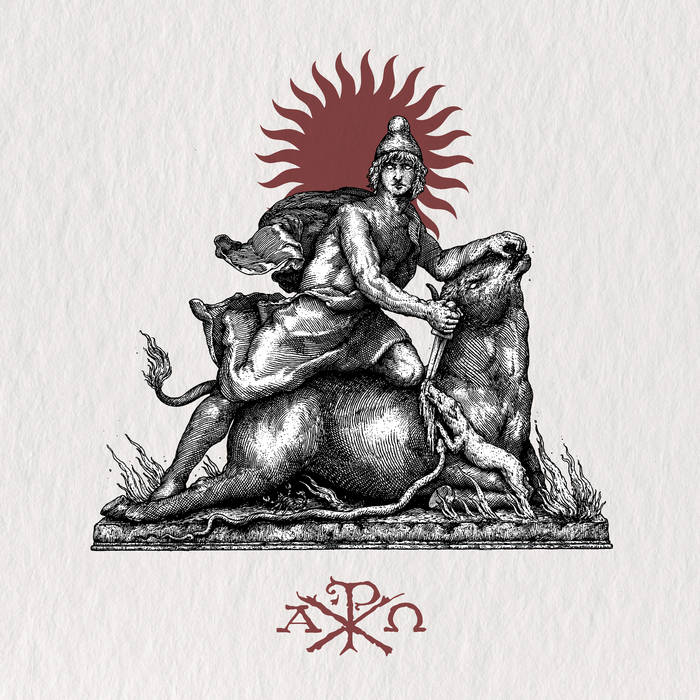
Thematically, Catechesis is built on the clash between old-world beliefs and the imposition of a new order. Patristic approach this conflict not merely as a musical framework, but as a metaphysical battlefield. The album moves with an almost cinematic, soundtrack-like flow, allowing the weight of history and philosophical tension to be felt in every note. The suppression of ancient faiths, the forceful rise of new doctrines—this collision of eras, filtered through the dark tones of metal, pulls the listener into a kind of temporal dislocation.
This thematic core shapes the emotional landscape of the songs—at times heavy and suffocating, at others suddenly violent, yet always grounded in something deeply human. The pristine production might strike some listeners as overly polished, but what Patristic achieve here is a rare synthesis of technical precision and emotional depth. This isn’t an album that settles for passive listening—it asks for time, for attention, for a willingness to uncover its layers.
In the end, Catechesis is not just another extreme metal record. It’s the product of a journey—one that Schettino and his collaborators seem to frame as a confrontation with history and truth itself. This is an album that gives voice to inner conflicts, that shakes the listener with its historical storms, that searches for light within the shadows of ancient archives.
And the wind that drifts through the lines of Catechesis keeps turning those dust-covered pages—calling out from the past, echoing into the chaos of the present.