
Album Review
LUCILLE - DAWN OF DESTRUCTION
Dying Victims Productions
Thrash Metal
08/10
Dawn of Destruction drags the listener into the cold, bleak streets of late 1980s Poland. Amid a city steeped in silence, each track strikes like a blow aimed at tearing through the darkness. The album doesn’t succumb to the artificiality of nostalgia; instead, it delivers a raw, unfiltered torrent of emotion that lets the weight of the past settle heavily on your shoulders. With its harrowing and intimate atmosphere, every note speaks a devastating truth.
Atmospherically, the album nods both to the lightning-fast worlds of American legends Slayer and Megadeth, and to the ruthless German-European edge of Kreator and Destruction. Opening track “Brand New World” sweeps away the dusty air of old records as the guitar duets (Ramone / Piotrowski) collide with unapologetic ferocity. Tracks like “Genetic Curse”, buried in their timeless rhythms, promise not just a simple tempo but a mental and physical jolt. Together, these songs capture the essence of the album: spinning in vicious circles, striking hard, yet never losing themselves in the void.
Vocally, Ramone alternates between the menacing edge of Mille Petrozza and the razor-sharp precision of Schmier. But the power here isn’t just in bidding farewell to the past—it’s in reshaping it. “Prophets of Disease” frees the album from the trap of mere throwback through fluid vocal passages and dynamic flow. Tracks like “Nightstalker” and the title track “Dawn of Destruction” melt pain within a melodic atmosphere, punctuated by searing solo duels that pierce the heart.
Guitar work strikes a perfect balance between technical mastery and emotional depth. Each note is meticulously crafted to support both the atmosphere and the narrative, with transitions between blistering passages and heavy, melodic sections that feel utterly natural. The bass doesn’t merely hold down the rhythm; it enriches the compositions with subtle melodic touches, reinforcing the album’s depth. Instrumental command here showcases the band’s technical acumen and musical vision, with guitar and bass in flawless interplay that propels the listener on a profound sonic journey.
Production is helmed by Aleksander Hybś, walking a fine line between vintage tape warmth and modern clarity. The album tells a story from the past, yet it’s never ambiguous. Each instrument—bass, drums, dual guitars, and vocals—works instinctively: clean, clear, and stripped of excess. This transparency reveals the chaos embedded within each track.
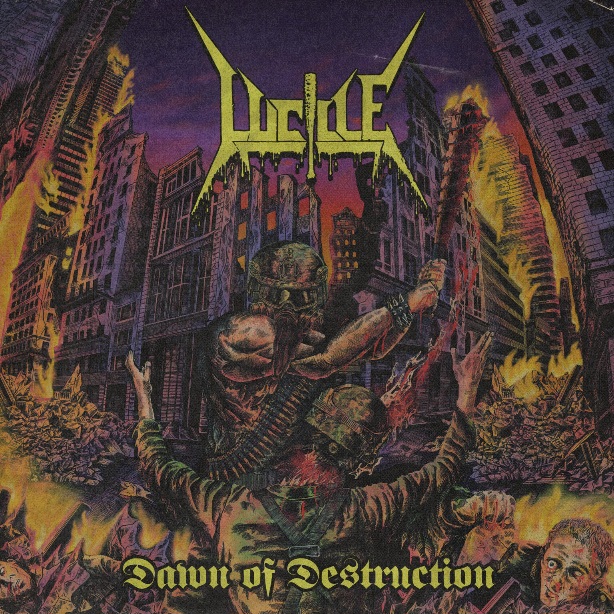
The Lucille album cover visually embodies the music’s dark, mysterious spirit. Intense reds and blacks mirror the album’s raw, emotional tone. The central figure represents both inner struggle and destruction, while blurred and abstracted details provoke curiosity. The artwork complements the music’s drama and intensity, though sharper lines and more defined colors could have enhanced clarity. At times, the cover evokes the texture of a T-shirt print, adding a tactile, lived-in feel.
Dawn of Destruction doesn’t reinvent the familiar; it unravels and rewinds the thrash thread, reshaping it from the remnants of the past. This is a manifesto of heroism for Lucille—paying homage to the old while opening fresh wounds. There’s no attempt to please anyone; every note lands like a bullet in the barrel. It’s as real as thrash metal gets.