Album Review
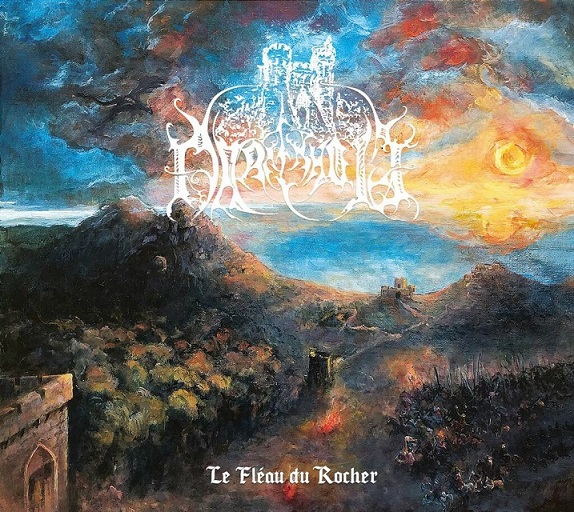
DARKENHÖLD - LE FLÉAU DU ROCHER
Les Acteurs de l'Ombre Productions
Black Metal
09/10
Darkenhöld weave once-forgotten bard songs—echoing through castle shadows—into something that cuts like a rusted dagger and breathes like a mist-covered forest. Le Fléau Du Rocher feels less like a record and more like slipping into a half-conscious dream, where you find yourself reliving a memory inside an ancient stone-walled structure. Rather than searching for a hidden detail in a dusty legend or history book, this album feels like touching something truly alive—something that still carries the pulse of the past.
On their sixth full-length, the French outfit once again builds their own tower—this time by fusing the spirit of ’90s melodic black metal with an epic narrative that stretches the limits of imagination. Darkenhöld’s essence goes far beyond sheer aggression; it’s a carefully constructed sonic architecture shaped by the voice of a storyteller. Just take the opening track, “Codex de la Chevalerie”: a slow-burning ascent, where melodies erupt with a chivalric grandeur, leaving behind a deeply immersive, almost cinematic atmosphere.
What stands out most throughout the album is the craftsmanship—the fine detail that sets them apart from their peers. This is neither a mechanical storm nor a lo-fi abyss drowned in darkness. Instead, it feels like guitar passages carved into stone walls like ancient frescoes, shimmering keyboard lines, and a kind of pastoral fury that quietly simmers beneath the surface. “Le Cortège Royal” is where this vision fully peaks: its arrangement evokes a lavish royal procession, carrying an almost ceremonial weight. It’s far more than just a catchy passage—it feels like the sound of a triumphant feast after victory.
Aldébaran’s guitar work occasionally channels the legacy of classic heavy metal, with flashes of IRON MAIDEN-inspired leads cutting through the mix. Yet on tracks like “Troubadour,” that same heritage is reshaped through pagan folk textures, almost transforming into something akin to a tarantella. As the song opens the door to the album’s second half, it doesn’t just shift the tempo—it reshapes the entire atmosphere. We’re no longer on the battlefield; we’re standing at the threshold of a bard’s inner journey.
“L’Ascension du Mage Noir” and the following “Dans l’Antre de la Vouivre” prove that this album doesn’t lean on nostalgia alone. These tracks carve out a more introspective, almost mystical space through their keyboard work, adding a gothic depth to the unfolding narrative. And then there’s “La Cavalerie Fantôme,” whose late-stage surge feels like more than just a musical climax—it hints at a kind of mental defiance beyond the sound itself.
The production is nearly flawless. Aside from the occasional prominence of the snare in the mix, everything feels intentionally restrained and thoughtfully balanced. The natural drum tone, the audible presence of the bass, and the seamless layering of ambient textures and guitars all serve to reinforce the album’s immersive world.
With Le Fléau Du Rocher, Darkenhöld open the gates to a world of their own making. Once you step inside, you can almost feel the dampness of stone walls, the glint of light on shields, and the oaths echoing through the silence of night. It’s a spell that translates the melodic fury of 1993 into a language of modern imagination. And maybe that’s why, above all else, it feels timeless. Like moss on stone—ancient, yet undeniably alive.