Album Review
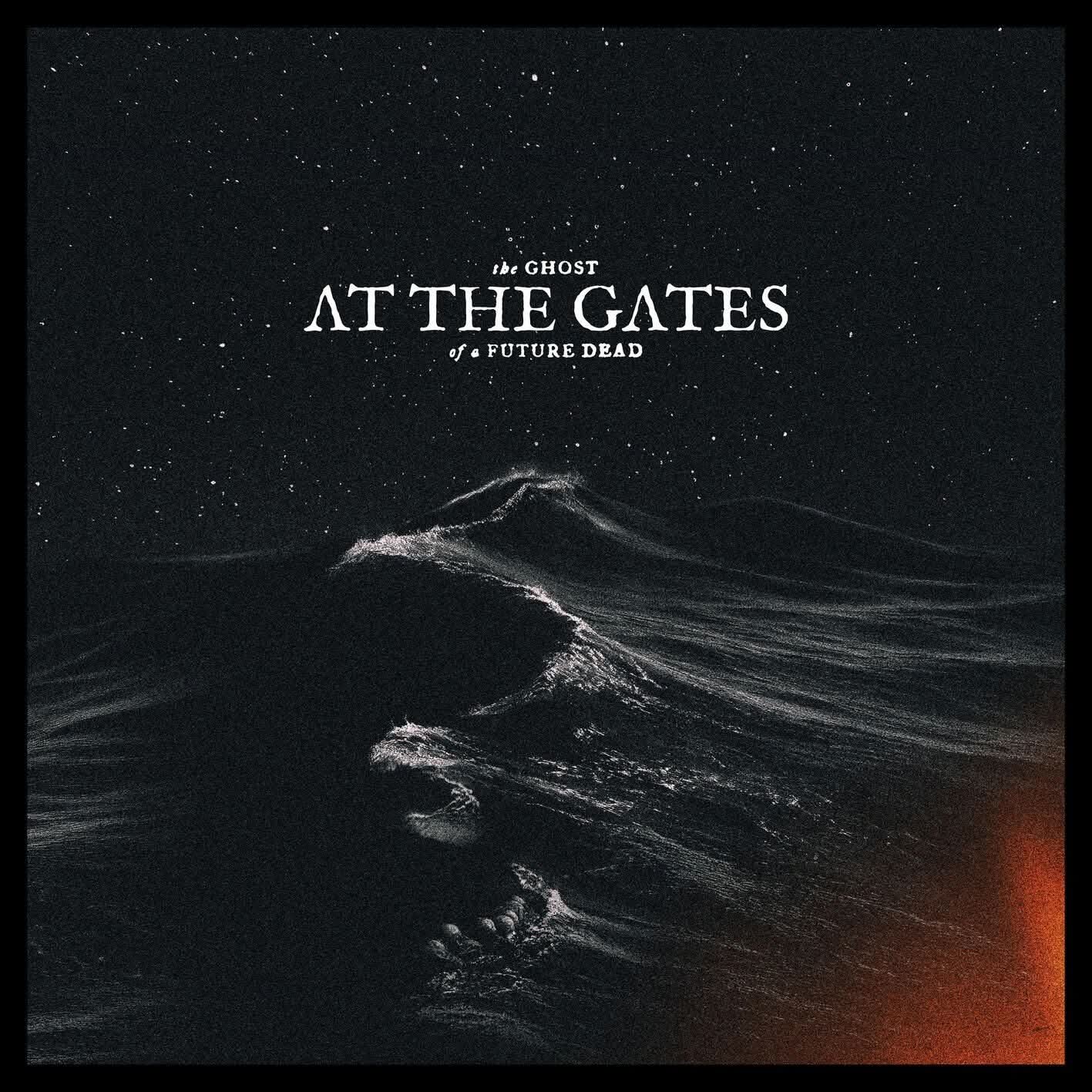
At The Gates – The Ghost Of A Future Dead
Review
Century Media Records
Melodic Death Metal
10/10
Some albums, once we get our hands on them after their release, make their impact felt immediately—not merely by satisfying the curiosity of “let’s see what they’ve done this time,” but through the heavier, more complex emotions they carry. At The Gates’ The Ghost Of A Future Dead is precisely such a record: far more than a nostalgia-laden album from a band we’ve followed since the very first day they stepped onto the stage, one that accompanied us throughout our adolescence and youth.
The story behind the album inevitably places it somewhere else entirely. Even if you are unaware of the tragedy, the tension embedded within the album’s solid sonic structure is conveyed directly to the listener. Even so, it is impossible to ignore the almost tangible, living intensity that Tomas Lindberg’s vocals—recorded in the final period of his life—imbue across the entire album. This record largely leaves behind the experimental touches of the band’s recent era and moves along a more direct trajectory. With Anders Björler’s return, the songwriting—songwriting as we know it—has sharpened; the tracks reach the listener head-on without losing time in labyrinthine corridors. Opening track “The Fever Mask” serves as a clear summary of this approach: the dense space occupied by the guitars, when combined with the song’s relentlessly unyielding tempo, creates an impact that inevitably seizes the listener.
Following immediately after, “The Dissonant Void” sets the band’s past and present into a brief confrontation. The melodic motion emerging from a darker, more unsettled atmosphere elevates the track beyond a straightforward aggressive stance, transforming it into something that burns from within. This attitude is present throughout the album: a familiar surface texture, with a constantly shifting tension beneath it.
Tracks like “A Ritual Of Waste” and “The Unfathomable” represent the album’s most ferocious face. Yet even in these moments, what dominates is not the effect of a purely destructive natural disaster, but a sense of calculated devastation. The remarkable interplay between Björler and Larsson’s guitars, alongside Adrian Erlandsson’s signature performance, effectively determines the direction of the songs. This unified, monolithic structure forged by figures who have shaped the very framework of the Swedish death metal sound stands as one of the album’s greatest strengths.
Even in moments where the tempo relatively drops, the level of tension remains unchanged. “In Dark Distortion” lowers the pace slightly, yet the unsettling force within it does not diminish. The spaces opened by the guitars are dominated and filled by Lindberg’s presence. Meanwhile, “Det Oerhörda” stands as one of the rare moments where the band introduces a different color without pushing its boundaries too far; subtle folk inflections place the track within the album’s overall cohesion without alienating it.
As the album progresses, the trio of “Of Interstellar Death,” “Tomb Of Heaven,” and “Parasitical Hive” reminds us why the band has been so decisive within the Gothenburg sound. The internal balance within these three tracks presents, with the At The Gates signature, the fine line between the elegance of melody and the abrasive force of aggressive riffs. Everything is exactly where it should be.
“Förgängligheten” feels like a brief interlude, laying out the early melodic death metal experiences of the ’90s before us like an exhibition. This short pause further solidifies the impact of the closing track “Black Hole Emission.” The final piece does not so much conclude the album as it seals it—like closing the gate of a warrior’s tomb.
On the production side, what stands out is the perceptible balance between the crystal clarity afforded by modern technology and the organic texture that remains an essential hallmark of At The Gates’ sound. Every instrument is clearly audible, yet this clarity does nothing to soften the album’s suffocating nature. On the contrary, it intensifies its density even further. As for the vocal performance, Lindberg’s delivery exists far beyond technical evaluation. Every word that falls from Tomas’ mouth, every note his voice reaches, carries the fragility of his final days and his resolute stance against everything he was battling.
The Ghost Of A Future Dead is not an album that simply revisits the strongest eras of a band’s career. It is a work that brings one of the most important bands in the global metal scene—and one of its most recognized and respected frontmen, Tomas Lindberg—to the pinnacle of their shared journey. This album embodies a timeless farewell, a career that never felt sufficient for its fans. Like a fortress conquered and bestowed upon his people by a warrior who knew he was living his final days, it takes its place in history as Lindberg’s final gift to us.