
Album Review
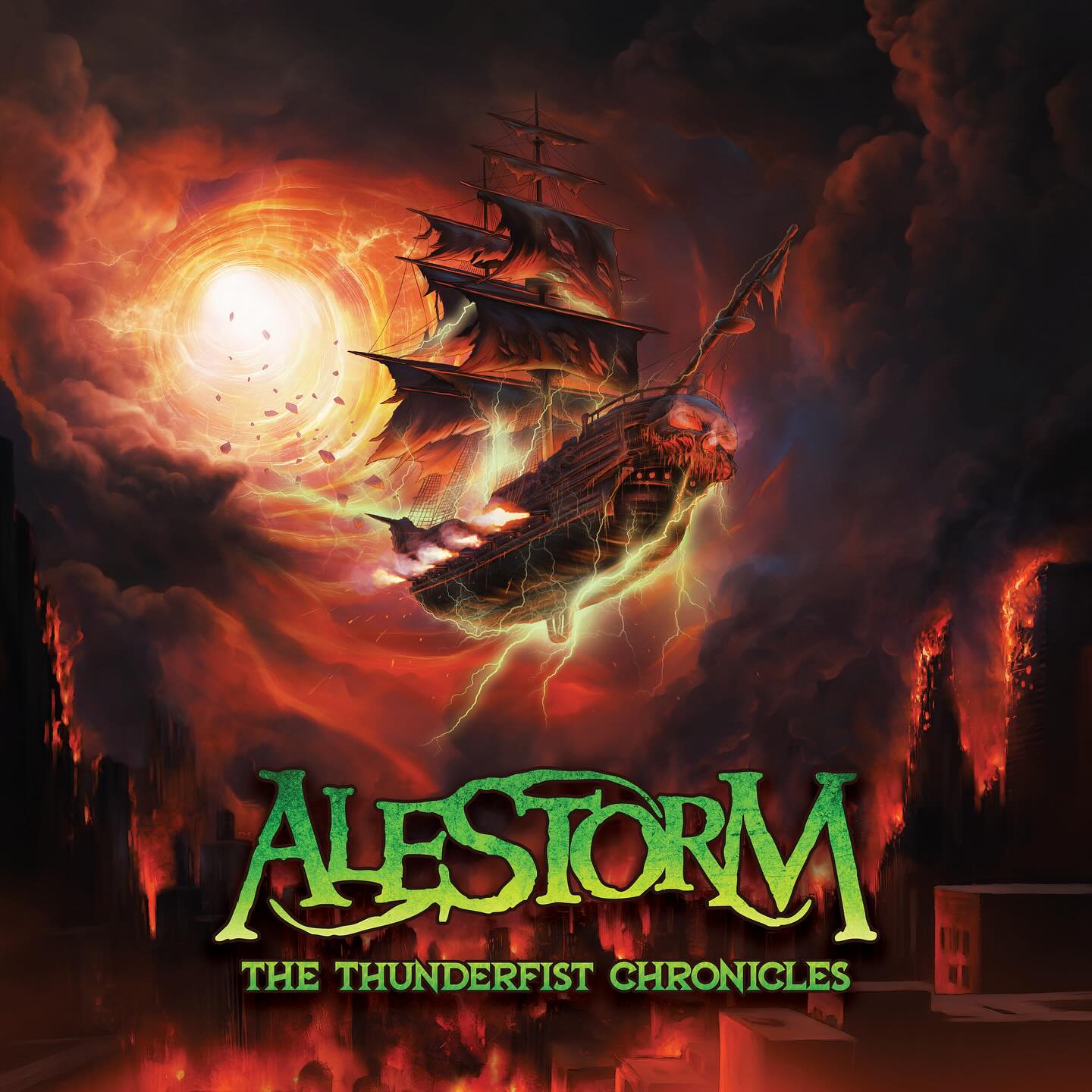
ALESTORM - THE THUNDERFIST CHRONICLES
Napalm Records
Folk/Power Metal
07/10
Alestorm have spent years dragging their fans into riotous, booze-soaked storms that openly mock the very idea of “serious” music. The Thunderfist Chronicles, however, feels like the moment that storm begins to run aground.
While the album continues the band’s eighteen-year-long pirate metal escapade, this time around the humor feels sharper—almost bitter—and the exaggeration is pushed to the edge of self-caricature. What we’re hearing isn’t so much freshness or reinvention, but a kind of relentless endurance: a band stretching its own limits, pushing forward with stubborn energy even within well-worn formulas.
The opening track, “The Great Goat of the Sea,” sticks to the classic Alestorm blueprint, yet there’s an unmistakable sense that the band is now parodying itself. The blast beat-laced melodic structure feels less like a pirate ship cutting through waves and more like a rollercoaster ride. Everything is fast, loud, and deliberately over-the-top—almost to the point of artificiality. And right there, it becomes clear what Alestorm are really up against: themselves. Not the crowd laughing along, not the critics trying to take them seriously—just the absurd universe they’ve built, now starting to feel like a cage of its own making.
“The Legend of the Thunderfist” leans heavily on accordion-driven motifs, reading both as a nod to the band’s past and a full embrace of kitsch. But as the track unfolds, the raw tempos and simplistic rhythmic patterns begin to wear thin, creating a subtle sense of fatigue. Technically, though—guitar tone, drum production, vocal effects—everything is polished to a mirror shine. And that’s part of the problem: this level of sterility traps the chaotic, грязy spirit of piracy—its filth, booze, and rebellion—behind glass, like a museum exhibit. In that sense, The Thunderfist Chronicles doesn’t sound like a pirate ship—it sounds like a pirate-themed amusement park ride.
That said, the album isn’t entirely stuck in this mode. “Voyage of the Dead Marauder” offers a comparatively darker shade, with guest vocals and passages that flirt with death metal. It’s a rare moment of introspection for Alestorm; the humor takes a step back, making room for a warped sense of epic weight. But the shift is short-lived. As soon as “Uzbekistan” kicks in, the band snaps back to its familiar self: absurd, catchy, unnecessary—and somehow still effective. Which brings the central question into sharper focus: is Alestorm still genuinely fun, or just a very loud joke that’s starting to repeat itself?
Another notable aspect is how Christopher Bowes’ vocals have evolved into something more theatrical, even grotesque, compared to earlier releases. On tracks like “The Last Pirate” and “Return to Tortuga,” he sounds less like a narrator and more like a stage clown shouting into the void. It works in preserving the band’s signature sarcasm, but at the same time, it almost completely erases any remaining sense of musical sincerity. Maybe that’s the point: Alestorm as a theatrical troupe, reflecting everything through an exaggerated, distorted mirror where nothing is meant to be taken seriously.
Often labeled by critics as a “stagnation record” or a band folding in on itself, The Thunderfist Chronicles also functions as a test of how sustainable Alestorm’s fantasy world really is. The humor can feel overwhelming, the repetitive riff structures can wear on the ear, and the thematic saturation borders on excess.
And yet, there’s a strange consistency in its occasional descent into absurdity. Alestorm still do what they do extremely well. The issue is that what they do has become so familiar, so predictable, that very little of it feels surprising anymore.
In the end, The Thunderfist Chronicles feels like both a celebration and a curtain call. A celebration, because Alestorm still command a uniquely bizarre stage of their own. A curtain call, because there may not be many new tricks left to perform on it. The album stands as proof that pirate metal has evolved from a genre into a spectacle. And maybe that’s why, more than anyone else, Alestorm seem to be laughing at us—though beneath that laughter, there’s a faint trace of exhaustion.