

News
Black Metal Had a Bass with Its Own Voice
The Backbone of Black Metal
Some musicians write songs. Others redefine the role an instrument can play within that music. To me, B. War belonged to the latter.
When we think of black metal, the first things that usually come to mind are tremolo-picked guitars, relentless blast beats, and feral vocals rising out of the darkness. The bass, more often than not, remains an invisible backbone lurking behind that wall of sound, content to follow the guitars. B. War was one of the musicians who refused to accept that.
When you listen to the bass lines he wrote, you don't hear an instrument confined to the guitars' shadow—you hear an independent voice telling its own story. The lines he crafted during his years with Marduk, in particular, carried a character that never lost its sense of melody amid the violence or its direction within the chaos. Many listeners may not notice it at first. But anyone who plays bass knows those notes weren't written simply to reinforce the band's sound.
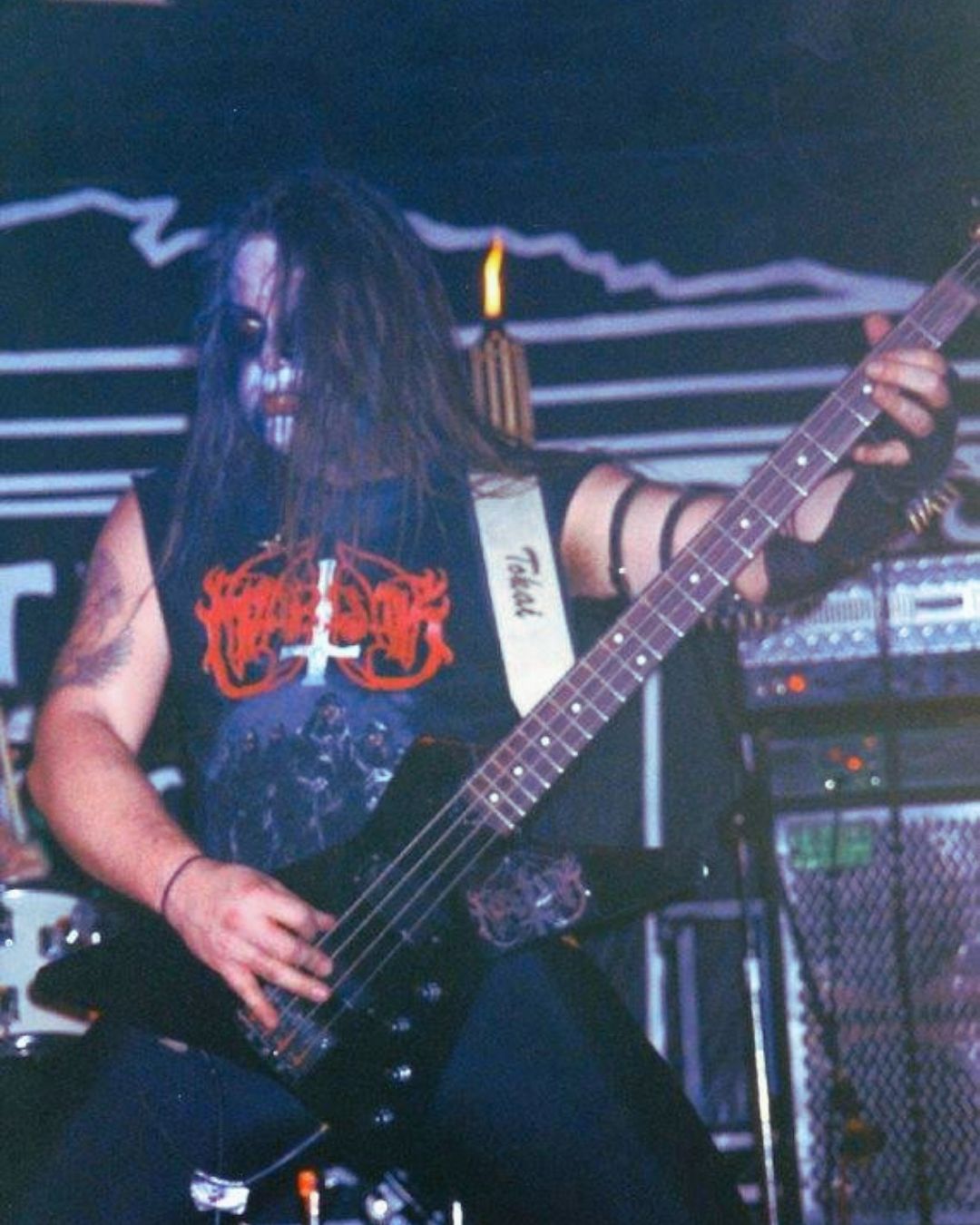
Since we're talking about Marduk, it's worth focusing on the period when he joined the band. Svensson's arrival marked a turning point for both his own career and the band's. Those of the Unlight was the first album on which he took part as a full-time member throughout the creative process. From Heaven Shall Burn... When We Are Gathered onward, he became part of Marduk's most productive and influential years. Without question, he played a significant role in the band's rise on the international black metal scene, giving Marduk's sound a distinct identity through his unique approach to the bass.
Even on two of Marduk's most ferocious records, Nightwing and Panzer Division Marduk, B. War found a way to imprint his own identity on the band's sonic assault. On Nightwing, his melodic and atmospheric bass lines stood out, while on an album as relentlessly intense as Panzer Division Marduk, he still managed to preserve the instrument's individuality. Instead of merely doubling the guitar riffs, he wrote bass lines that conversed with them, challenged them, and at times even pushed them forward. That's why his playing was never just another part of the rhythm section—it was one of the hidden layers that helped define Marduk's identity.
But remembering him solely for Marduk would be incomplete. The same philosophy was already evident in Allegiance before he joined the band. Wherever he played, he sought to prove that the bass wasn't simply an instrument that should be heard—it was one that deserved to be listened to. He may never have been the most talked-about musician. He was never the one standing at the very front. But those who truly listened always recognized what he was doing.
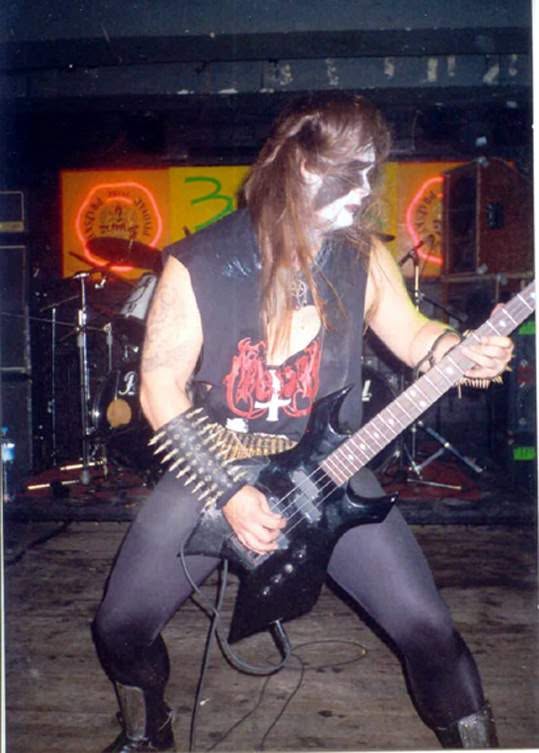
Looking back today, the greatest lesson B. War left me wasn't about technique—it was about perspective. He showed that the bass wasn't meant to exist merely in service of the guitars, but that, in the right hands, it could become the unseen backbone of a song. He showed what it means to write bass parts with real character, even within music as dense and unforgiving as black metal.
Most musicians gradually fade away or walk away from music because they can no longer endure the demands of touring and performing, or because they've run out of things to create. Svensson did the exact opposite. While he was still one of the key members of a band like Marduk and at the peak of his career, he left it all behind. Choosing a quieter, family-oriented life, he moved to the United States.
Not every musician leaves behind the same kind of legacy. Some leave impressive sales figures. Others leave unforgettable concerts. B. War left behind an approach that attentive listeners are still discovering to this day. Perhaps his name was never spoken as loudly as it deserved to be. But the bass lines he wrote will continue to stand among the most distinctive and deeply individual examples in the history of black metal.
Farewell, B. War.
Thank you.
For showing us that even within the darkest music, every instrument can find the light of its own path.
OZAN