Interview
Stone Cult interview
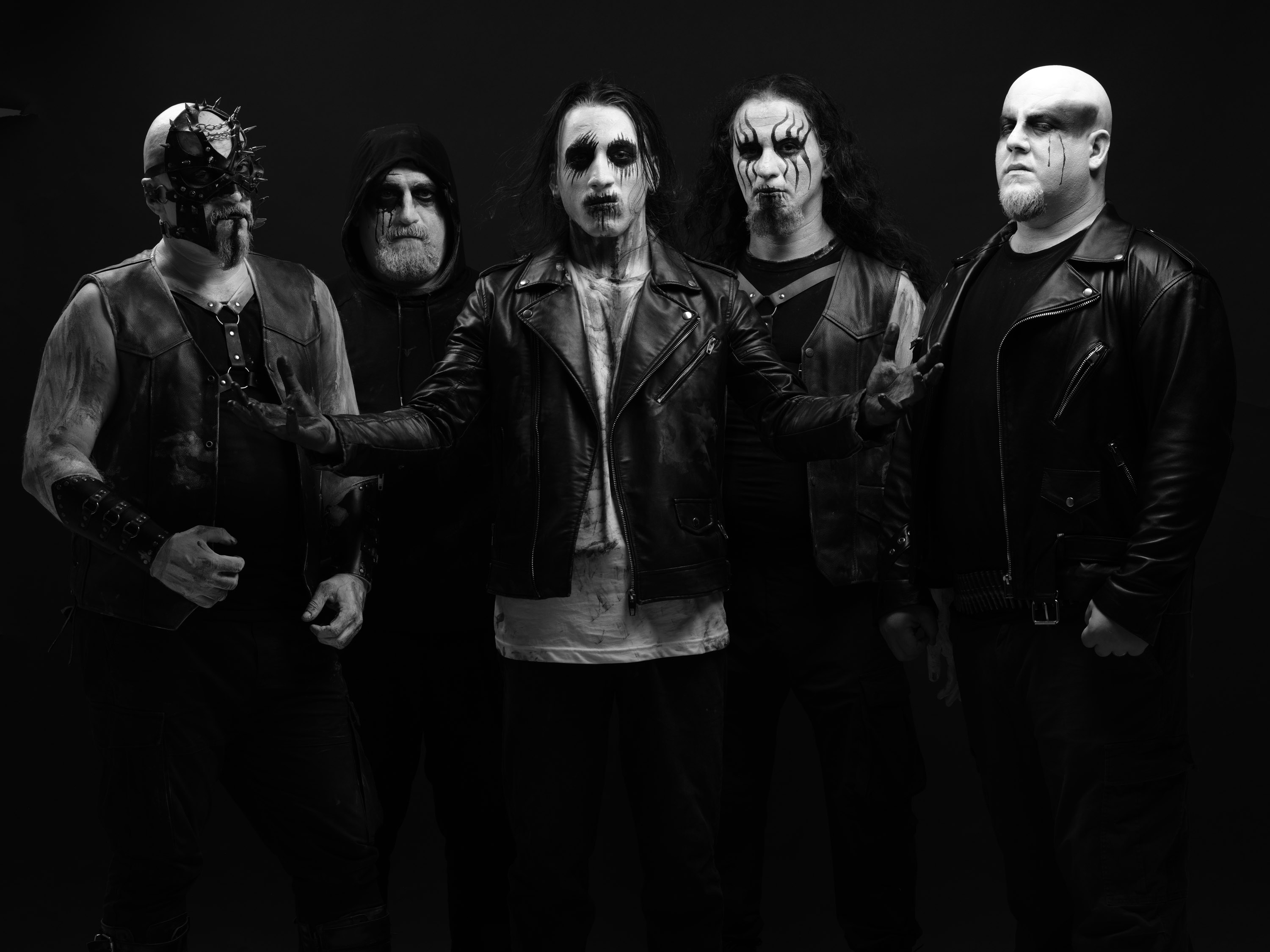
Emerging from Istanbul’s underground, Stone Cult is one of those bands that refuses to rush its steps despite a relatively short history. After making their presence known with their debut EP, the band now reaches a far more defined and expansive point with The Great Ritual of Night and Death. More than just a debut full-length, the album serves as a clear statement of intent—laying out the band’s musical direction, approach, and boundaries with striking clarity.
In this interview, we focus on that debut album while diving deeper into Stone Cult’s creative process—from songwriting and sonic choices to live performance and their perspective on today’s music landscape.
PitStop: Greetings to the whole band. We previously spoke with you on YouTube, but this time you’re one of the first bands we’re featuring in Pit-Stop’s written webzine format. First of all, thanks for joining us—welcome. Let’s get straight into it.
The Great Ritual of Night and Death is your first full-length album and it’s just been released. Congratulations once again. When you place this album within both the Turkish and global black metal scenes, do you think Stone Cult has already taken its risks, or did you prefer to stay within a safer zone for a debut?
Bahadır: Greetings to the entire Pit-Stop team, and thank you for having us.
As Stone Cult, we’re not a band driven by short-term or impulsive decisions. So it’s never been a case of “we’ll take risks today and play it safe tomorrow.” Our priority is to execute our concept in the most accurate way possible and deliver it to the listener as intended. Our path is clear—if that path requires taking risks, we’ll take them without hesitation.
PitStop: I know you worked in great detail while shaping the album’s concept and writing the lyrics. What was the most challenging aspect of the lyric-writing process?
Bahadır: I can say that the lyric-writing process took longer than composing the music. Rather than calling it “challenging,” the most time-consuming part was making sure the lyrics—written within a long-term framework—were used at the right time and in the right place. Some lyrics were intentionally set aside for future albums. When you’re building a cohesive concept rather than focusing on a single release, it naturally demands more time and effort.
Ziya: Greetings. There’s a clear sense of chronology and narrative running through the album—everything is built on that structure. We worked together on almost every line and shared the weight of the process. I completely agree with Bahadır; some lyrics were deliberately reserved for the second album. In fact, I can say this—the next album will present this lyrical structure in a much more detailed way.
PitStop: Compared to your 2024 EP Extinction VI, this album feels much more cohesive and concept-driven. Was this evolution planned, or did it happen naturally?
Bahadır: We always planned the EP as a preview of the album and shaped our roadmap accordingly. The transition from EP to full-length was a deliberate step in that evolution, and future releases will continue to follow this plan.
Ziya: Extinction VI was like a key—an entry point. With the album, we started telling the main story. It was entirely a planned evolution, and that sense of cohesion will continue to grow moving forward.
PitStop: The album features two instrumental pieces—Extinction VI as an intro and Fall of Man toward the end. This is something often seen in second-wave black metal records. Is this approach a reflection of your influences, or did it come from the album’s internal dynamics?
Bahadır: The two tracks actually have different origins. From the beginning, we wanted an instrumental piece to open both the EP and the album. Initially, we composed something fully orchestral, but it didn’t quite capture the spirit of the material. Through revisions and inspiration drawn from the album’s overall atmosphere, Extinction VI evolved into its final form.
Fall of Man, on the other hand, came from a different idea. We felt there should be a connection between Magnus Ritus Noctis Et Mortis and Holocaust. We imagined a melody inspired by the ending of Holocaust that could bridge those two tracks—and that’s how the piece came to life.
PitStop: The album establishes a very clear sonic identity, yet it also hints at its own limits. Do you see this record as defining Stone Cult’s sound, or are you still exploring?
Bahadır: As I mentioned in our first interview, we mapped out a four-album concept on the second day of forming the band. We’re still following that path, and we see this album as completing the sound of the first chapter. We’re not in a phase of searching. That said, as the stories evolve, the sound will naturally evolve with them. We have no intention of staying fixed in one place.
Also, I’d like to thank Emre Bingöl, who played a major role in shaping the album’s sound from start to finish.
PitStop: The album was released on February 20 and is still very fresh. Based on listener feedback, which track do you think represents it best?
Bahadır: Looking at the feedback, Holocaust and Ordo Ab Chao seem to stand out. But for me, Apocalypse is the track that captures the full essence of the album.
Ziya: I’d definitely say Apocalypse as well. It feels like a summary of the entire album—a powerful final scene. Listener reactions also lean in that direction, although Ordo Ab Chao and Holocaust are among the highlights.
Habip: I also think Apocalypse represents the concept best. At the same time, it’s my personal favorite to listen to.
PitStop: With the EP, you started to establish yourselves on stage, and now with the album, live performances continue. Sharing the stage with bands like Darkened Nocturn Slaughtercult is particularly notable. Can we say a core audience is starting to form?
Bahadır: From the beginning, we aimed to develop both the production and live aspects of the band simultaneously. We’ve had the chance to share the stage with many valuable local and international acts, including Darkened Nocturn Slaughtercult. We do our best to present our music in the strongest possible way live, and the feedback we receive after shows reflects that.
Of course, as a band with just one full-length released, we still have a long road ahead. But the members’ past experience in the black metal scene gives us a clear advantage. Our youngest member, the vocalist, also brings an energy that makes that experience shine even more on stage.
Habip: Unlike the others, I’m relatively new and younger within the black metal scene. Playing my first shows alongside bands like Dødsferd and Darkened Nocturn Slaughtercult was incredible for me. I’m really grateful for that opportunity.
Since our first gigs, we’ve always tried to give our best. I observe the crowd while performing—even seeing a few positive reactions is enough to motivate me. No matter how many people are there, I always aim to give everything I’ve got.
PitStop: As far as I know, you’re currently not signed to a label. How are you approaching this? Are you considering working with a label for physical releases?
Bahadır: That’s right, we’re not signed at the moment. We couldn’t find a label that aligned with us in terms of timing, so we decided to release the album digitally on our own.
We’re currently working on physical editions and expect to finalize that soon.
PitStop: On a global scale, there seems to be a clear imbalance between visibility and reach for black metal on platforms like Spotify. Where does Stone Cult position itself in this equation?
Bahadır: I see digital platforms as a very important tool for reaching listeners. Yes, they accelerate consumption, but they also encourage production by removing the waiting times associated with physical releases.
That’s why we chose to release the album digitally first. But that doesn’t mean we’re abandoning physical formats. We’re continuing to work on offering the best possible options for listeners who prefer that experience.
PitStop: Your artwork so far prominently features red tones. Some bands—like Type O Negative or Agathodaimon—are known for sticking to a certain visual palette. Is Stone Cult developing a similar visual identity?
Bahadır: For the first EP and album, it was important for us that the colors and concept complemented each other. That said, our visual vision isn’t tied to a single palette.
Each album will have its own distinct color world and visual language, shaped by its concept. This approach will carry over into physical releases and merchandise as well.
PitStop: Finally, is there anything you’d like to say to your listeners?
Bahadır: The album is still very new and we’re continuing with live shows, but at the same time we’ve already started working on new material. Let this be the first place we announce it—we’ll soon release a new single that will open the door to the second album’s universe.
It was a pleasure to do this interview again, thank you.
Ziya: Thanks to everyone who supports us through social media and at shows. The album is out, but we’ve already started working on a new single—and we’ve even begun playing it live. Everything is moving forward according to plan. Let’s see where it leads.
Habip: I’d like to thank everyone who supports us genuinely, without expecting anything in return—especially you and all our listeners.